
Balloon Sinuplasty vs. Traditional Sinus Surgery in Galloway Twp., NJ
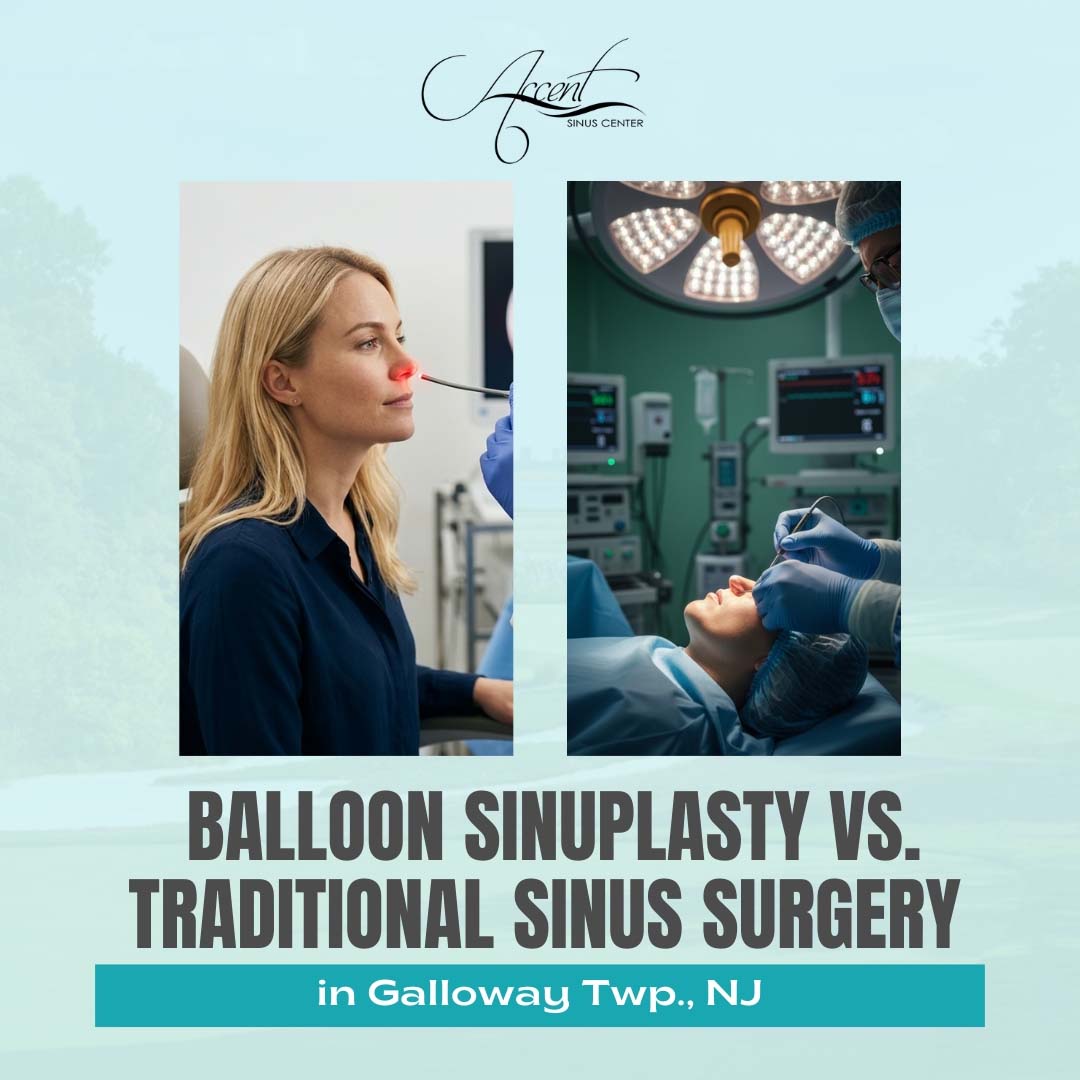
Persistent sinus issues such as nasal congestion, difficulty breathing, postnasal drip, sinus pain, and headaches are typically not life-threatening. However, if left untreated and unmanaged, they can be frustrating.
If medications and other forms of treatment prove to be ineffective, your ENT doctor in Galloway Twp., NJ, may recommend other treatment options, which may include sinus surgery.
Before you make any decision, here’s what you need to know about sinus surgery:
What Is Sinus Surgery?
Sinus surgery is an ENT procedure designed to treat certain cases of chronic sinusitis and other persistent sinus issues that may be caused by structural issues. This may be the recommended treatment option if other forms of treatment (such as standard medications) are ineffective in managing persistent symptoms.
Your ENT specialist in Galloway Twp., NJ, may make recommendations based on clinical findings, symptom severity, medical history, nasal structure, and other individual health factors.
There are two common types of sinus surgery: balloon sinuplasty and functional endoscopic sinus surgery.
What Is Balloon Sinuplasty?
Balloon sinuplasty is a minimally invasive ENT procedure that may be considered for certain cases of chronic sinusitis in selected patients. A consultation with your ENT doctor can help assess your symptoms and recommend balloon sinuplasty when appropriate for your condition.
The procedure uses a small, flexible balloon catheter that is inserted into the affected sinus cavity via the nose.
What happens during a balloon sinuplasty procedure?
To begin the procedure, your ENT physician injects local anesthesia into the tissues lining the sinuses. This will numb the area and prepare it for treatment. Then, they insert a small and flexible balloon catheter into the sinus cavity. Once in place, the balloon is gently inflated. This is intended to widen and open blocked sinus passages, which can facilitate sinus drainage and airflow in appropriate patients. Then, the balloon is deflated and removed.
What is healing and recovery like after the procedure?
During your pre-procedure consultation, your ENT doctor will walk you through the procedure and what you can expect after. This may include:
✅Stay in the hospital or medical office after the procedure and leave only when you are comfortable.
✅Have someone take you to and from your appointment.
✅Use nasal packing if necessary.
✅Avoid blowing your nose for 24 to 48 hours after the procedure.
✅Rinse your nose with a saline nasal spray.
✅Elevate your head during sleep to minimize post-procedure congestion.
✅Avoid strenuous activities for about a week after the procedure.
✅Schedule and keep follow-up appointments so your physician can monitor your recovery progress.
As this is a medical procedure, there are potential risks and complications, including post-procedure congestion, swelling, and a bloody nasal discharge.
What Is Functional Endoscopic Sinus Surgery?
Functional Endoscopic Sinus Surgery (FESS) is a sinus surgery and ENT treatment option that can treat some cases of chronic sinusitis related to structural issues, such as nasal polyps. FESS allows ENT doctors to operate on the sinuses without making external cuts or incisions.
Your ear, nose, and throat doctor in Galloway Twp., NJ, may recommend this procedure depending on the severity of your condition, nasal structure, and the presence (or absence) of structural abnormalities.
What happens during a FESS procedure?
Before the procedure, you are put to sleep with general anesthesia. In some cases, they may also use a local anesthetic within the nasal tissues to help control bleeding and improve comfort.
They insert an instrument called an endoscope, which has a light and a camera on one end, into the sinus cavity via the nostril. Then, they will use specialized instruments to remove nasal polyps, bone, or diseased tissue that may be causing persistent blockages.
What is healing and recovery like after the procedure?
Before your scheduled appointment, your ENT doctor will thoroughly explain what happens during and after the procedure. For healing and recovery, it may include:
✅Stay in the hospital or medical office until you wake up and are comfortable to leave and go home.
✅Have another responsible adult take you to and from your appointment.
✅When you sneeze, open your mouth.
✅Avoid blowing your nose for about a week after the procedure.
✅Rinse your nose with a saline nasal spray.
✅Avoid strenuous activities as advised by your doctor.
✅Schedule and keep follow-up appointments so your doctor can monitor your healing progress.
As with any medical procedure, there are risks and side effects, which may include bleeding, swelling, and general discomfort in the treatment area.
Frequently Asked Questions About Sinus Surgery
What is chronic sinusitis?
Chronic sinusitis is a long-term irritation, swelling, and inflammation of the tissues lining the sinuses. The sinuses are hollow, air-filled spaces located behind the nose, cheeks, and forehead. They produce mucus and humidify the air we breathe naturally. But sometimes, they become irritated and swollen, which could trap mucus.
Symptoms can last for 12 weeks or longer. Common symptoms include:
- A stuffy nose with thick yellow or green mucus discharge
- Postnasal drip, or mucus dripping down the back of the throat
- Pain, pressure, and tenderness around the eyes, nose, cheeks, and forehead
- Coughing
- Ear pain
- Toothache
- Loss of taste or smell
- Halitosis, or chronic bad breath
Which type of sinus surgery is best for chronic sinusitis?
Balloon sinuplasty and functional endoscopic sinus surgery (FESS) are two common procedures designed to treat certain aspects of chronic sinusitis. Balloon sinuplasty may be considered in certain cases involving sinus blockage, while FESS may be considered in cases involving nasal polyps or other structural findings, depending on individual evaluation.
Your ENT physician can assess your symptoms and recommend which of the two is more appropriate for your condition based on clinical findings, symptom severity, underlying causes, sinus anatomy, and other individual health factors.
Is sinus surgery worth it?
While persistent sinus issues are not life-threatening in most cases, they can affect daily life, productivity, sleep quality, and comfort if left untreated and unmanaged. A consultation with an ENT specialist can help assess whether this is the appropriate treatment for your condition.
Your Sinus Surgery Options in Galloway Twp., NJ
Accent Head and Neck is an ENT clinic that serves patients in Galloway Township, Absecon, Egg Harbor Township, and surrounding Atlantic County communities. Patients who wish to learn about our clinic, specialties, and services can visit and explore our website for more information.