
How to Protect Your Hearing During Concert Season
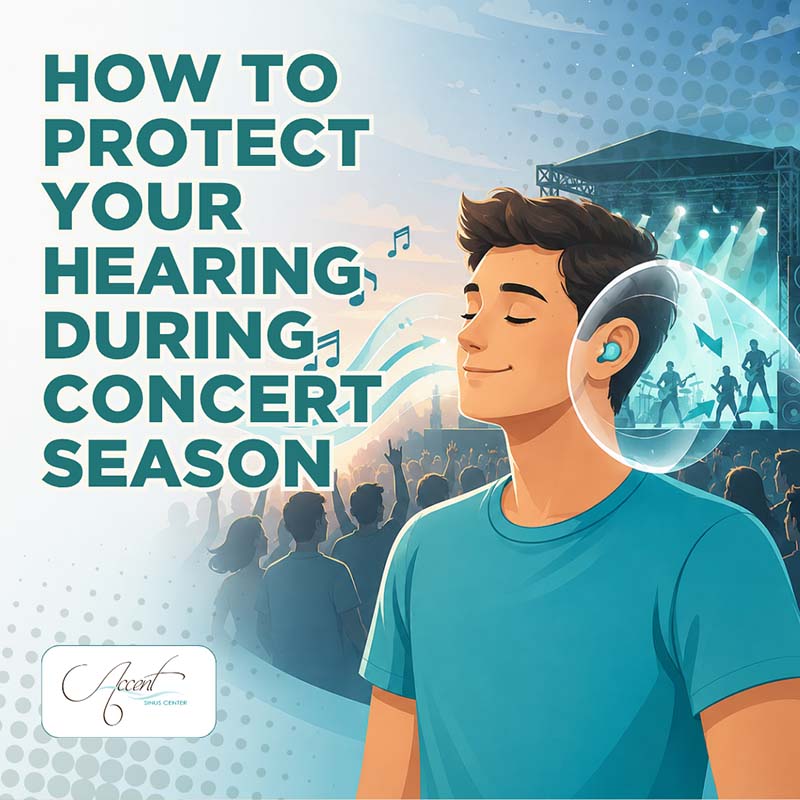
There’s something unforgettable about live music. The energy of the crowd, the powerful sound system, and the feeling of hearing your favorite song performed in person are all part of the experience. What many concertgoers don’t realize, however, is that even one night of extremely loud noise can temporarily—or sometimes permanently—affect their hearing.
At Accent Sinus Center, we often meet patients who assume hearing damage only happens after years of working around loud machinery. In reality, repeated exposure to loud concerts, music festivals, sporting events, and other high-volume environments can gradually affect hearing, especially when proper protection isn’t used.
The good news is that protecting your hearing doesn’t mean giving up live music. A few simple habits can go a long way toward preserving your hearing for years to come.
Why Loud Music Can Damage Hearing
Inside your inner ear are thousands of tiny sensory cells called hair cells. These cells convert sound vibrations into signals your brain recognizes as sound.
Unlike many other cells in the body, damaged hair cells do not regenerate.
When you’re exposed to loud sounds for an extended period, these delicate cells can become overstimulated. The louder the sound and the longer the exposure, the greater the risk of permanent hearing damage.
Concerts often reach sound levels well above what’s considered safe for prolonged listening, especially when you’re close to speakers or standing near the stage.
Temporary Symptoms Shouldn’t Be Ignored
Many people leave a concert expecting their ears to ring for a while.
Although ringing or muffled hearing often improves within several hours, those symptoms are signs that your ears have been exposed to more sound than they can comfortably handle.
You may notice:
- Ringing or buzzing in the ears (tinnitus)
- Muffled hearing
- A feeling of fullness in the ears
- Difficulty understanding conversations immediately afterward
While these symptoms may disappear, repeated exposure can increase the risk of lasting hearing changes over time.
Simple Ways to Protect Your Hearing
Fortunately, protecting your hearing is easier than many people think.
Wear High-Fidelity Earplugs
High-fidelity earplugs are designed to reduce sound levels while maintaining more natural sound quality than some conventional earplugs.
Give Your Ears a Break
If you’re attending a long concert or music festival, step away from the speakers for several minutes every hour. Even short breaks from loud noise can reduce overall sound exposure.
Choose Your Location Carefully
Standing directly in front of speakers exposes your ears to the highest sound levels. Moving farther away can significantly reduce the intensity without affecting your enjoyment of the performance.
Limit Back-to-Back Exposure
Concerts, clubs, sporting events, and listening to music through headphones at high volume on the following day all add to your overall noise exposure.
Allowing time between loud-noise exposures can help reduce your cumulative noise exposure.
Don’t Forget About Headphones
Concert season isn’t always limited to live events.
Many people listen to playlists while driving to the venue, use headphones at the gym, and continue listening after the show ends.
Following the 60/60 rule—listening at no more than 60% of maximum volume for no longer than 60 minutes at a time before taking a break—can help reduce unnecessary exposure during everyday listening.
When Ringing Doesn’t Go Away
Occasional ringing after a loud event isn’t unusual.
However, ringing that lasts longer than a day or two, becomes persistent, or is accompanied by hearing changes deserves medical attention.
Persistent tinnitus can sometimes signal damage to the hearing system, particularly if it’s associated with repeated exposure to loud noise.
Early evaluation can help identify hearing changes and determine whether additional testing is appropriate.
How Do I Know It’s Time to Have My Hearing Checked?
Even gradual hearing loss can be difficult to recognize because it often develops over many years.
Consider scheduling a hearing evaluation with the an ENT specialist in your area if you:
- Frequently attend concerts or music festivals.
- Notice ringing after loud events.
- Ask people to repeat themselves more often.
- Struggle to hear conversations in restaurants or crowded places.
- Find yourself increasing the television or phone volume.
- Feel your hearing isn’t as sharp as it used to be.
Many people are surprised to learn that mild hearing changes can develop long before they become obvious in everyday life.
Protect Your Hearing Today for the Years Ahead
Live music should create lasting memories—not lasting hearing problems. Understanding how loud sound affects your ears and taking a few preventive steps can help reduce your risk of noise-induced hearing loss without taking away from the experience.
At Accent Sinus Center, we’re committed to helping patients protect their hearing at every stage of life. Whether you’ve noticed changes in your hearing, experience persistent ringing, or simply want peace of mind after years of attending concerts and loud events, give us a call to schedule a hearing evaluation and learn how we can help you preserve your hearing for the future.