
Constant Runny Nose but Allergy Treatment Is Not Helping? It May Be Chronic Rhinitis
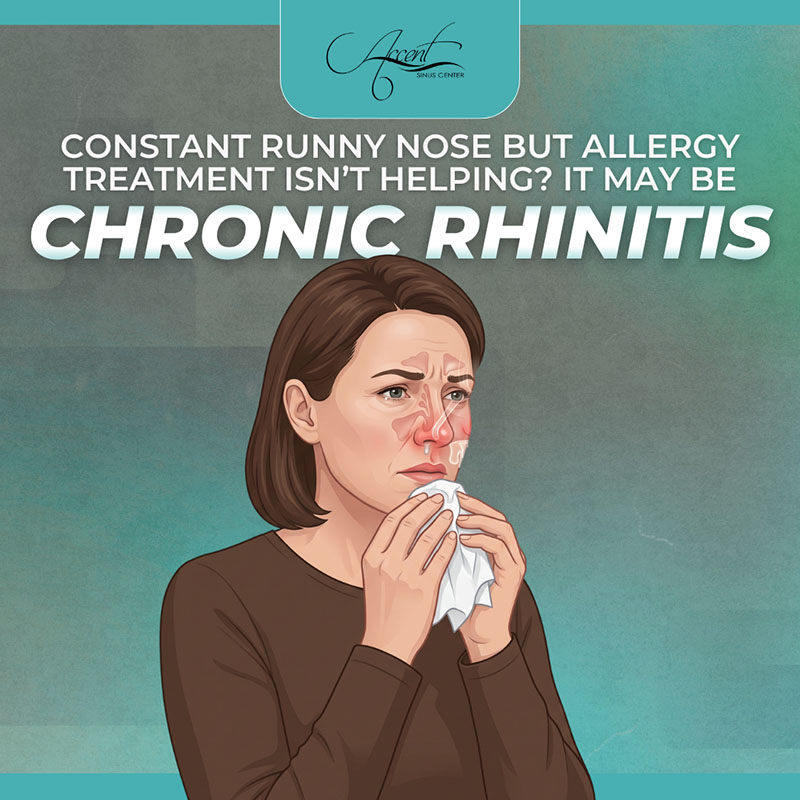
A constantly runny nose can be more than a minor inconvenience. You may need to keep tissues nearby, clear your throat throughout the day, or struggle with congestion that interferes with breathing and sleep.
Although allergies are a common cause of nasal drainage, they are not the only possibility. When allergy medication does not provide enough relief—or when symptoms occur without a clear allergen—chronic nonallergic rhinitis may be involved.
At Accent Head and Neck, we help patients in Galloway Township and surrounding South Jersey communities determine what may be causing persistent nasal symptoms and which treatments may be appropriate.
Direct Answer: Why Is Allergy Treatment Not Stopping Your Runny Nose?
Allergy treatment may not help if your runny nose is caused by nonallergic rhinitis, a combination of allergic and nonallergic rhinitis, or another nasal condition.
Nonallergic rhinitis can be triggered by temperature changes, smoke, fragrances, spicy foods, medications, or overactive nasal nerves rather than an allergic immune reaction. Because these triggers work differently from allergens, oral antihistamines alone may provide limited relief.
An evaluation can help determine whether your symptoms are allergic, nonallergic, mixed, or related to another nasal or sinus condition.
What Is Chronic Rhinitis?
Rhinitis is inflammation or irritation of the lining inside the nose. It may cause drainage, congestion, sneezing, postnasal drip, or nasal itching.
Symptoms may be considered chronic when they persist or repeatedly return for months. People with chronic rhinitis may feel as though they always have a cold or allergy flare, even when they are not sick and pollen counts are low.
Common symptoms include:
- A persistent or frequently runny nose.
- Clear, watery nasal drainage.
- Nasal congestion.
- Postnasal drip.
- Frequent throat clearing.
- Coughing caused by drainage.
- Sneezing.
- A sensation that mucus is always present.
Not every person experiences all of these symptoms. Some primarily have watery drainage, while others experience congestion and postnasal drip.
What Is the Difference Between Allergic and Nonallergic Rhinitis?
Chronic rhinitis is generally divided into allergic, nonallergic, and mixed forms.
Allergic Rhinitis
Allergic rhinitis occurs when the immune system reacts to an allergen such as pollen, mold, dust mites, or pet dander.
Symptoms may include:
- Sneezing fits.
- An itchy nose or throat.
- Itchy, watery eyes.
- Clear nasal drainage.
- Nasal congestion.
- Symptoms that follow a seasonal or exposure-related pattern.
Allergic rhinitis can be seasonal or present throughout the year, depending on the trigger.
Nonallergic Rhinitis
Nonallergic rhinitis causes similar nasal symptoms without an allergic immune response. The nasal lining and the nerves controlling mucus production may react too strongly to ordinary environmental or physical triggers.
Possible symptoms include:
- A runny nose.
- Postnasal drainage.
- Nasal congestion.
- Sneezing.
- Symptoms triggered by weather, odors, food, or irritants.
Itchy eyes and intense nasal itching are generally less prominent with nonallergic rhinitis than with allergies.
Nonallergic rhinitis is sometimes called vasomotor rhinitis, although that term does not describe every form of the condition.
Mixed Rhinitis
Some patients have both allergic and nonallergic rhinitis. For example, pollen may cause allergic symptoms, while temperature changes and fragrances trigger additional nonallergic drainage.
Allergy treatment may improve part of the problem without resolving every symptom when mixed rhinitis is present.
What Can Trigger Nonallergic Rhinitis?
Nonallergic rhinitis does not require exposure to a specific allergen. Symptoms may be triggered by several factors.
Weather and Temperature Changes
Moving between warm and cold environments or experiencing changes in humidity can cause the nasal lining and blood vessels to react. Some people notice sudden drainage when entering an air-conditioned building or going outdoors in cold weather.
Smoke and Strong Odors
Cigarette smoke, air pollution, cleaning products, perfume, cologne, and other strong odors can irritate sensitive nasal tissue.
Spicy or Hot Foods
A runny nose that occurs while eating is known as gustatory rhinitis. Spicy foods are a common trigger, although hot foods and alcoholic beverages may also contribute.
Exercise
Exercise can increase airflow and stimulate the nasal tissues, causing congestion or drainage in some people.
Hormonal Changes
Pregnancy, puberty, menopause, and certain hormonal medications can affect blood flow and swelling inside the nose.
Medications
Some blood pressure medications, anti-inflammatory medications, sedatives, and hormonal medicines may contribute to nasal symptoms in certain patients.
Do not stop a prescribed medication without speaking with the healthcare professional who prescribed it.
Overuse of Decongestant Sprays
Topical decongestant sprays can provide temporary relief. Using them longer than directed may cause rebound congestion, also known as rhinitis medicamentosa.
The nose can then feel more obstructed as the medication wears off, leading to repeated use and worsening symptoms.
Why Might Allergy Medication Not Be Working?
Several explanations are possible.
Your Symptoms May Not Be Allergy-Driven
Oral antihistamines are designed to block histamine, a chemical involved in allergic reactions. If histamine is not driving the symptoms, these medications may provide little benefit.
The Medication May Not Target Your Main Symptom
Different nasal medications target different symptoms. A treatment that helps itching and sneezing may not adequately control watery drainage or significant congestion.
Medication selection depends on the symptom pattern, underlying cause, and medical history.
You May Have Mixed Rhinitis
Allergy medication may improve pollen-related sneezing and itching while leaving temperature-triggered drainage or congestion unchanged.
Exposure May Still Be Occurring
Even effective allergy treatment may not completely control symptoms when exposure to a relevant allergen remains high. Testing and a review of the symptom pattern may help identify an overlooked trigger.
Another Condition May Be Present
Persistent symptoms can also result from:
- Nasal polyps.
- A deviated septum.
- Chronic sinus inflammation.
- Nasal valve narrowing.
- Medication-related rhinitis.
- A lingering respiratory infection.
- Another source of nasal drainage.
Rather than simply adding more allergy medication, a reevaluation can help determine whether the original diagnosis still explains the symptoms.
How Is Chronic Rhinitis Evaluated?
An ENT evaluation may include questions about:
- How long the symptoms have been present.
- Whether drainage is clear, thick, or discolored.
- Whether symptoms are seasonal or year-round.
- What environments or activities trigger symptoms.
- Whether itching or watery eyes are present.
- Which medications have been tried.
- Whether symptoms affect one side or both sides.
- Previous allergy-testing results.
- A history of sinus disease, nasal injury, or surgery.
The provider may examine the nasal passages for swelling, drainage, polyps, or structural obstruction. Nasal endoscopy may be used when a closer view is needed.
Allergy testing may be recommended when allergic rhinitis remains a possibility. Testing identifies allergic sensitization, but the results must be interpreted alongside symptoms and exposure history.
How Is Chronic Rhinitis Treated?
Treatment depends on whether the condition is allergic, nonallergic, mixed, medication-related, or associated with another nasal problem.
Saline Rinses
Saline may help remove mucus, allergens, and irritants while moisturizing the nasal lining. Only distilled, sterile, or previously boiled and cooled water should be used for nasal irrigation.
Prescription Nasal Sprays
Depending on the symptoms, an ENT may recommend:
- Corticosteroid nasal sprays to reduce inflammation.
- Antihistamine nasal sprays, which may help some allergic and nonallergic symptoms.
- Ipratropium nasal spray to reduce excessive watery drainage.
Each medication has different uses and potential side effects. A provider can determine which approach may be appropriate.
Trigger Management
Avoiding smoke, strong fragrances, or other known irritants may help reduce flare-ups. Patients triggered by temperature changes may benefit from covering the nose in cold or windy conditions.
Trigger avoidance is not always practical, but identifying patterns can make symptoms easier to manage.
Allergy Treatment
If testing and the symptom history support allergic rhinitis, allergy medication, environmental changes, or immunotherapy may be considered.
Treating allergies may not eliminate nonallergic symptoms when mixed rhinitis is present.
Treating Other Nasal Conditions
Nasal polyps, chronic sinusitis, a deviated septum, or nasal valve narrowing may require their own treatment. Addressing these conditions may improve obstruction but will not necessarily stop drainage caused by overactive nasal nerves.
In-Office Treatment for Persistent Chronic Rhinitis
For appropriate patients whose symptoms continue despite medical management, an in-office procedure may be considered.
RhinAer® is an FDA-cleared device that uses temperature-controlled radiofrequency energy to address nerves involved in chronic rhinitis symptoms. The goal is to reduce excessive nasal drainage and congestion by modifying overactive nerve signals.
Accent Head and Neck also offers ClariFix®, which uses targeted cooling to address these nerve signals.
Neither procedure is appropriate for every patient, and neither guarantees that symptoms will resolve. An ENT evaluation can determine whether chronic rhinitis is present and whether a procedural option may be reasonable. Individual results and recovery experiences vary.
When Could a Runny Nose Signal Something Else?
Most persistent runny noses are related to rhinitis or another nonemergency nasal condition. Certain patterns deserve more prompt evaluation.
Contact a healthcare provider if drainage:
- Consistently occurs from only one nostril.
- Contains blood.
- Has an unpleasant odor.
- Is accompanied by significant facial pain or fever.
- Begins after a head injury or nasal procedure.
- Is unusually clear and watery, increases when bending forward, or has a salty or metallic taste.
Rarely, clear one-sided drainage—particularly after an injury or surgery—can represent cerebrospinal fluid leakage. This requires prompt medical evaluation.
Seek emergency care for difficulty breathing, facial swelling, vision changes, confusion, a severe headache, or neurological symptoms.
When Should You See an ENT?
Consider scheduling an evaluation when a runny nose:
- Continues for weeks or months.
- Occurs throughout the year.
- Does not improve with appropriate allergy treatment.
- Is accompanied by significant postnasal drip or congestion.
- Interferes with sleep, work, or daily activities.
- Is triggered by weather, odors, or food rather than allergens.
- Occurs primarily on one side.
- Requires frequent use of decongestant spray.
Persistent symptoms may require a different diagnosis rather than stronger allergy medication.
Find Out What Is Causing the Drainage
A constant runny nose is not always caused by allergies. Nonallergic rhinitis, mixed rhinitis, medication effects, chronic sinus inflammation, and structural nasal conditions can produce similar symptoms.
Identifying whether the symptoms are allergic, nonallergic, or caused by another condition is the first step toward choosing an appropriate treatment plan.
Accent Head and Neck provides ear, nose, throat, sinus, and allergy care for patients in Galloway Township and surrounding South Jersey communities. Contact our team to schedule an evaluation and learn what may be causing your persistent runny nose.